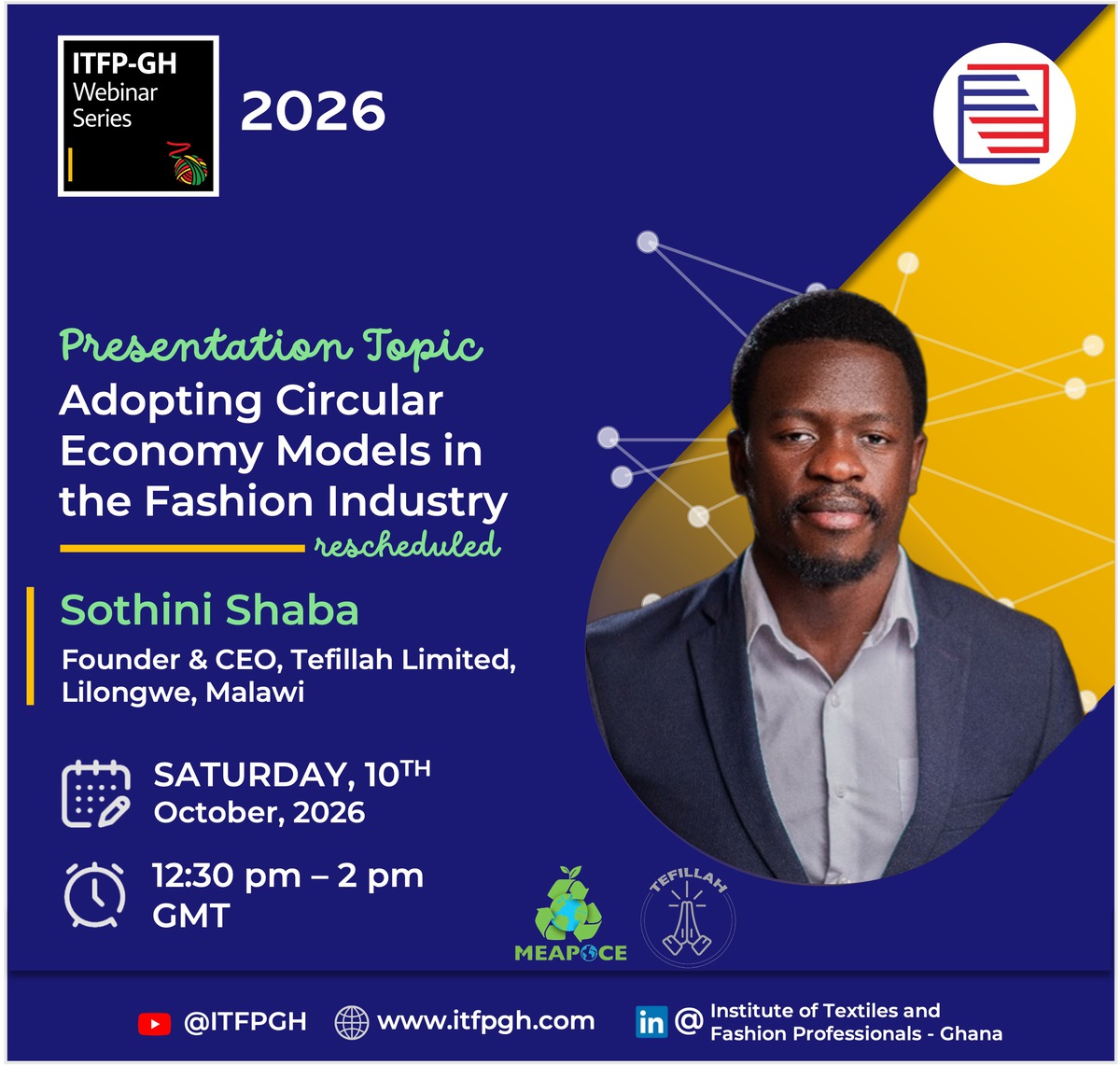
Adopting Circular Economy Models in the Fashion Industry by Sothini Shaba
Presented by Sothini Shaba,
Tefillah Limited, Lilongwe, Malawi
Adopting a circular economy in the fashion industry shifts from the traditional linear "take-make-waste" model to a regenerative system that keeps materials in use for as long as possible. It emphasises designing durable garments for longevity, reuse, repair, resale, and recycling, while using safe, renewable, or recycled inputs like rPET from plastic waste. This approach minimises textile waste (less than 1% of materials are currently recycled into new clothing), reduces water, energy, and carbon emissions, and unlocks economic value through new business models such as rental and resale platforms and closed-loop recycling. In 2026, circular fashion is becoming a strategic driver, supported by regulations like the EU Digital Product Passport, helping brands cut costs, build resilience, and meet growing consumer demand for transparency and sustainability.
Questions are welcome at the end of the presentation.