Image Credit: KNUST-Ghana
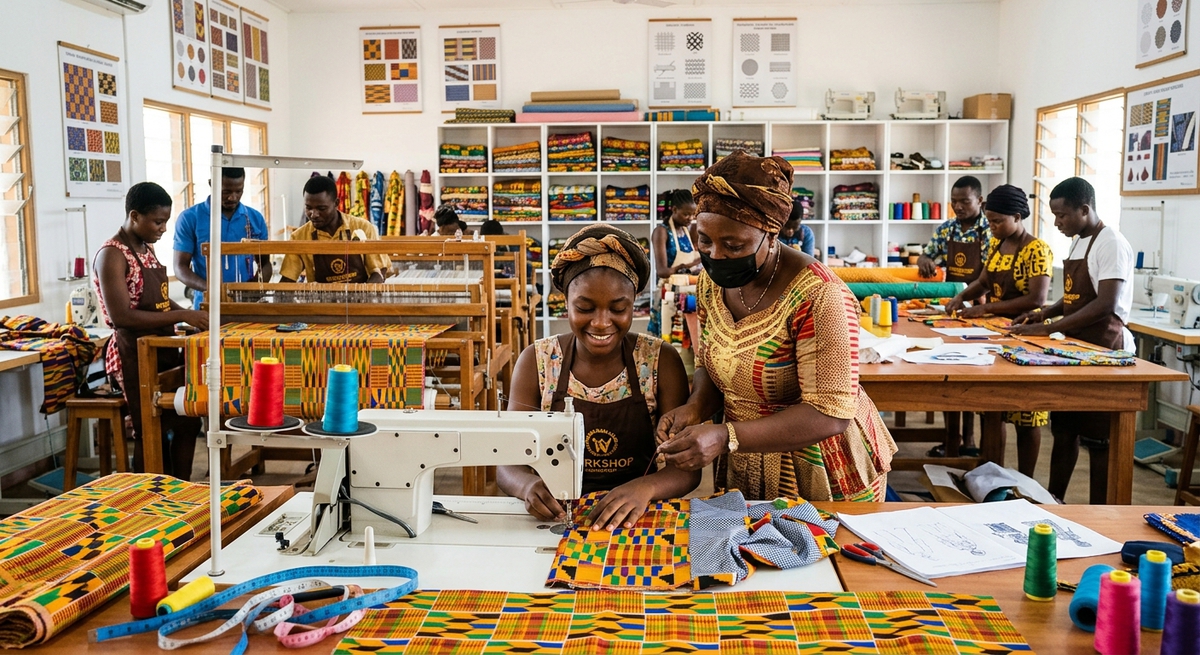
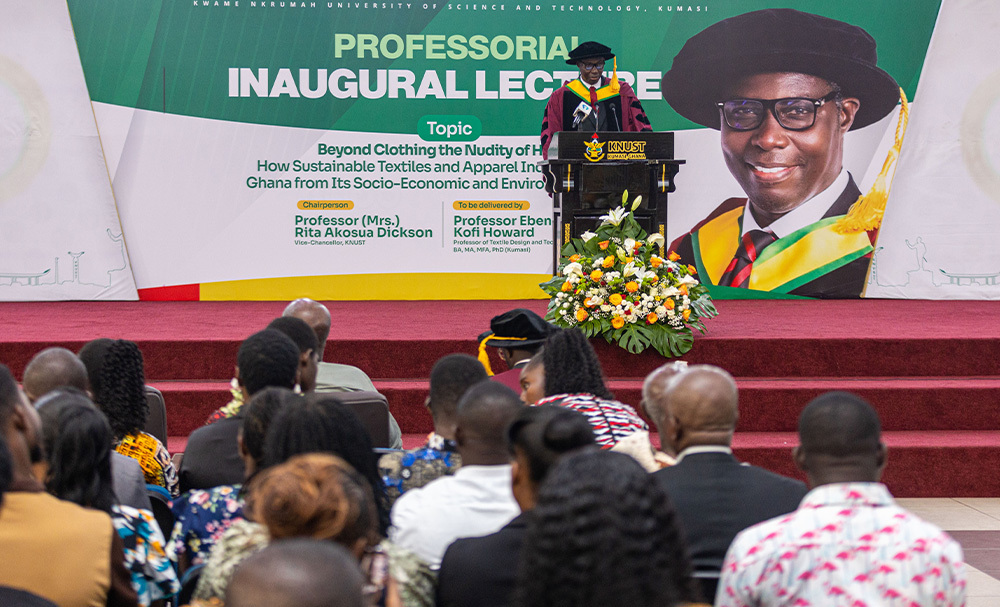
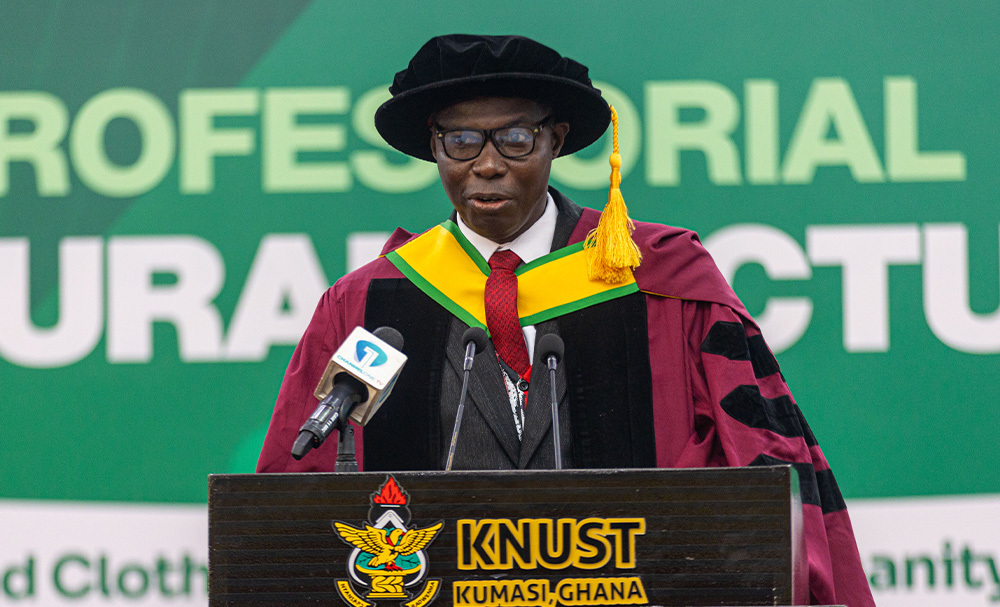
As a Professor of Textile Design and Technology, he has dedicated his research to sustainable textiles and argued that Ghana’s industry has operated “in a vacuum with no direction or vision”. He cited China, India, Pakistan, and Bangladesh as nations that have built world-class textile industries not through accident but through deliberate, sustained government investment, institutional coordination and strong national policies. Ghana, by contrast, currently imports approximately 95% of its textile inputs, a dependency that Prof. Howard described it as fundamentally incompatible with any serious ambition for industrial recovery. Prof. Howard recounted that Ghana's textile and apparel (T&A) sector was once a cornerstone of the country's industrial identity in the 1960s, suffering a prolonged and painful collapse. He attributed this to policy gaps, the unchecked influx of cheap imported apparel and textiles raw materials and finished products, with second-hand clothing “flooding” the Ghanaian market thus, undercutting local apparel and textile producers at every turn. He also noted that 99% of Ghana's textile raw materials for making kente, smock and African print - including dyes, fibres, yarns, fabrics, and auxiliaries - are currently imported, leaving domestic producers exposed to volatile global prices and supply disruptions.
He therefore advocated for increased patronage of Made-in-Ghana textiles and apparel, emphasising that greater local consumption would stimulate industry growth and contribute to the country's Gross Domestic Product (GDP).
Furthermore, findings from his recent students revealed a significant decline in the performance of Ghana's textile and apparel (T&A) industry, prompting the development of innovative models that offer practical pathways to sustainable production. Prof. Howard argued plainly that without a dedicated institutional home and a coherent national strategy, the sector cannot recover. His lecture passionately highlights some key quotes that give a true reflection of how Ghana’s “nudity” is exposed.
Specifically, he notes “Ghana is symbolically naked”, “Ghana is socio-culturally naked”, “Ghana is economically naked”, “Ghana is environmentally naked” and that “Ghana is sitting on ‘gold’ but begging for ‘straw”.
In his candid submissions, he proposed three (3) interconnected pillars for reviving the T&A industries in Ghana.
- A Dedicated Ministry for Textiles and Apparel: To spearhead policies, operationalise the National Textile and Apparel Policy and coordinate the full value chain from textile production to apparel distribution.
- Rebuilding Ghana's Local Raw Material Base: Revision of the draft 2025 Ghana Textiles and Garment Manufacturing Policy to directly address the country's near-total dependence on imported raw materials for T&A production.
- Regional Production Hubs: The establishment of shift-based production centres in all 16 regions that integrate the government’s 24-Hour Economy initiative and also create employment opportunities for the youth.
The implications of Prof. Howard's proposals extend well
beyond factory floors and trade balances. For Ghana's academic and creative
communities, a dedicated ministry could unlock new streams of research funding,
deepen university-industry partnerships, and introduce more project-based,
real-world learning into fashion and textile design education. Areas such as
sustainable design, inclusive and adaptive apparel, and technical textile
innovation - fields where Ghanaian institutions have significant potential -
could benefit substantially from a more coordinated national agenda.
The broader message from Prof. Howard clearly defines Ghana
as having the cultural heritage, agricultural capacity, and human capital to
compete in global textiles. What has been missing is the institutional
architecture to bind it all together. Prof. Howard's proposals arrive at a
moment of policy opportunity. His lecture adds significant academic and
professional weight to these efforts, providing a clear framework for what
institutional reform should look like and why it is urgent.
Beyond his policy recommendations, the inaugural lecture makes a significant contribution to the growing body of scholarship on sustainable industrial development in Ghana. By integrating research evidence, policy analysis, and industry practice, Prof. Howard's inaugural lecture demonstrated how academia can provide practical solutions to national development challenges. His lecture reinforces the strategic role of universities in generating knowledge that informs public policy, industrial transformation, and sustainable economic growth. Lastly, his lecture provides a compelling roadmap for revitalising Ghana's textile and apparel industry while reinforcing the vital role of academia in addressing national development priorities.